
Running a Sex Offender Check in Rappahannock County
The Virginia Sex Offender and Crimes Against Minors Registry is the primary source for a Rappahannock County sex offender check. Virginia State Police manages the public-notification database. It offers name and geographic search choices, including county and address or ZIP fields as displayed by the live portal. The Rappahannock County Sheriff does not publish a separate local registry, map, or mobile alert app.
Use the state registry first for Virginia data. Add the U.S. Department of Justice’s NSOPW search when an address sits near a state line or a person may have moved across jurisdictions. NSOPW draws from participating registries, but it is not the Virginia data custodian. Profile corrections and questions about a Virginia entry go to VSP. Local registration or suspected noncompliance questions can go to the Sheriff.
Rappahannock County Registry Duties
The Rappahannock County Sheriff performs local registration functions and forwards the information to Virginia State Police. VSP maintains the central registry and investigates failures, while local enforcement authority remains in place. Virginia law also requires physical verification within the time and frequency set by statute. These duties explain why a public profile may involve both a county office and a state database.
For a registration question, call the Sheriff before visiting. The county publishes no separately named registration unit, counter hours, or appointment schedule. The VSP Registry unit can be reached at (804) 674-2825 or sor@vsp.virginia.gov. That contact chain is more reliable than sending a correction to a search engine or reposting a possibly stale address.
Rappahannock County Sheriff’s Office
383 Porter Street
Washington, VA
(540) 675-5300
Call for current registration procedures
Virginia State Police Registry
State registry custodian
(804) 674-2825
sor@vsp.virginia.gov
Searching the Virginia Sex Offender Registry
Open the official portal and choose the search method that fits the question. A name search is best when a spelling is known. A geographic search is better for awareness around an actual address or ZIP. Read the live instructions because the portal controls partial-name behavior, radius choices, security checks, and terms.
- Open the Virginia registry and acknowledge the current conditions and warning shown by the portal.
- Choose a name search or geographic search. Select Rappahannock for the county filter when that field serves the query.
- Enter only known details, complete any CAPTCHA or terms checkbox, and submit the search.
- Compare the returned name, alias, physical details, jurisdiction, and address information before opening a profile.
- Read the full profile for status, offense, conviction, vehicle, school, work, and tier fields that are publicly displayed.
| Field | Type | Required | Use |
|---|---|---|---|
| Search type | Tabs or links | Yes | Choose name or geographic search as displayed. |
| Last name | Text | Name search | Follow the portal’s live exact or partial-name directions. |
| First name | Text | Optional | Narrows a name result when the spelling is known. |
| County | Dropdown | Optional | Select Rappahannock for a county-focused result. |
| City or ZIP | Text or dropdown | Geographic search | Use the actual place or ZIP requested by the form. |
| Address and radius | Text and dropdown | Geographic search | Read available radius options on the live screen. |
| CAPTCHA or terms | Security control | As shown | Acknowledge the current registry warning. |
The portal's live labels control the search, so confirm the displayed choices before relying on a saved set of steps.
Rappahannock Registry and NSOPW Searches
The Virginia portal is the authoritative source for a Virginia registration record. NSOPW is a national search layer over participating state, territorial, and tribal jurisdictions. It helps when a person may have moved or when a community-awareness search needs cross-state context. Its coverage and timing depend on the participating source systems.
The official National Sex Offender Public Website provides that broader search channel.
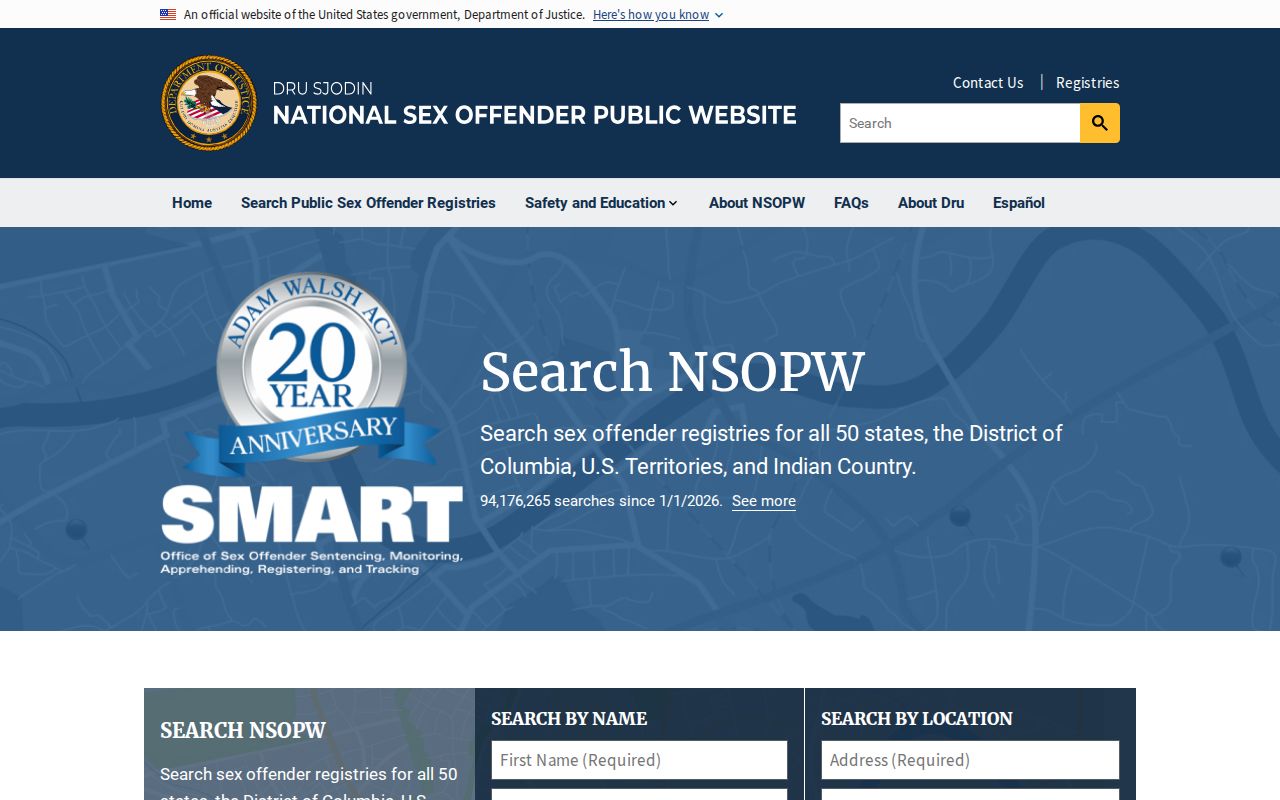
A national result should be traced back to the listed jurisdiction. For a Rappahannock County entry, use the VSP profile and contact VSP or the Sheriff about an apparent error or compliance concern.
Note: No verified Rappahannock County Sheriff app provides registry alerts, so rely on official state and national channels.
What a Registry Profile Shows
A public profile can identify the registrant and explain the registration basis, but exact fields vary. Virginia law controls what is displayed. The record may include an address or location, work or school information, vehicles, offense data, and status. It does not identify every other person at an address or prove who owns the property.
| Name and Aliases | The public registered name and other names made available under the Registry Act. |
|---|---|
| Photo and Description | A photograph plus public physical descriptors such as sex, race, height, weight, hair, eyes, and identifying marks. |
| Address or Location | Residence or location information released by law; it can change and does not describe every occupant. |
| Work, School, and Vehicle | Employer, school, or vehicle data when the governing statute makes the field public. |
| Offense and Conviction | Offense or statute, conviction jurisdiction, and conviction date where displayed. |
| Tier | The statutory registration classification, not a home-grown prediction of future conduct. |
| Status | Registration or compliance information available at the time of the live search. |
Use the issuing court for the full judgment when a short registry field needs more context.
Read Rappahannock Registry Profiles Carefully
A returned address reflects information made public when the registry was checked. It does not promise that the registrant is physically present at that moment. A person may have moved, entered custody, become transient, or reported a change that is still moving through verification. Do not add family names, property-owner data, social media claims, or directions to a residence.
Offense labels also need restraint. A profile can cite a Virginia statute or an out-of-state or federal equivalent, conviction date, jurisdiction, and tier. The issuing court holds the full case judgment. VADOC is the official source for public state custody or supervision information. Registration can continue after incarceration or supervision ends because it is a separate statutory duty. An absent registry result likewise does not prove that a person has no criminal history, since many crimes do not require registration.
Registration Requirements and Levels in Virginia
Virginia uses tiers to set registration, verification, and potential relief rules. Routine verification under Code § 9.1-904 differs by tier. A failure-to-register conviction can increase the schedule. Physical verification under § 9.1-907 adds another enforcement check for covered people. The periods below describe the cited statutory framework, not an automatic promise that a profile will disappear.
| Tier or Status | Routine Verification | Relief or Duration Point |
|---|---|---|
| Tier I | Yearly in the birth month | A person with one eligible Tier I offense may petition no earlier than 15 years from the later statutory date, subject to § 9.1-910. |
| Tier II | Yearly in the birth month | A person with one eligible Tier II offense may petition no earlier than 25 years, subject to § 9.1-910. |
| Tier III or murder | Four times each year at three-month intervals | Excluded from the § 9.1-910 removal route cited here. |
| Repeat failure to register | Tier I or II twice yearly; Tier III or murder monthly after the specified conviction | Criminal penalties arise under § 18.2-472.1. |
Verification frequency and removal eligibility serve different legal functions and should not be treated as the same deadline.
Rappahannock County Registry Verification
Section 9.1-907 requires physical verification within 30 days of initial registration or a reported change and semiannual checks for covered people who are not under Department of Corrections or community supervision. That physical check operates alongside the routine tier schedule. The Sheriff handles local registration work and sends information onward; VSP maintains the public system.
Removal is a court petition, not an automatic anniversary event. Under Code § 9.1-910, the 15-year and 25-year points apply only to defined eligible cases and conditions. Tier III and murder registrants do not use that cited removal route. A person researching a profile should read the current law and court record, then confirm local filing procedure with the Rappahannock Circuit Court clerk, instead of subtracting years from a conviction date and declaring that registration has ended.
Report Rappahannock Registry Concerns
If an address or status appears stale, preserve the public profile details needed to identify the record and contact the Rappahannock County Sheriff or VSP Registry unit. Report suspected noncompliance through those official channels. Do not visit the address, confront the registrant, or organize surveillance. For an existing releasable local agency record rather than a compliance report, follow the county's Virginia FOIA request guidance. The agency can compare a report with registration and verification information that is not fully public.
The Virginia Sex Offender and Crimes Against Minors Registry Act sets the public system’s duties and limits.
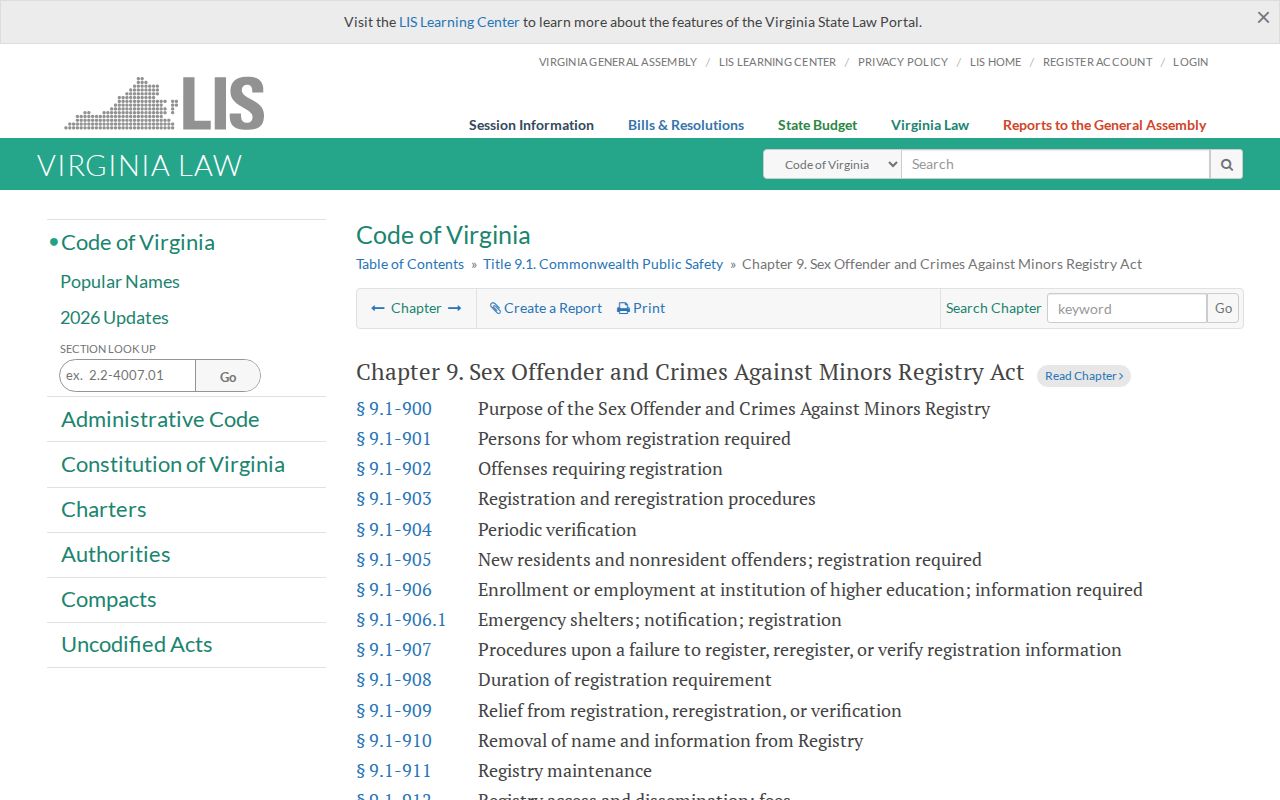
The statute supplies the legal context that a map pin or short profile cannot, including verification, relief, and misuse provisions.
Lawful Use and Community Notification
The registry exists for public notification and lawful community awareness. Use it to understand information that Virginia has chosen to publish and to send a good-faith compliance concern to the proper agency. A tier alone does not measure current danger. A pin does not identify every occupant. The official profile should be checked again before relying on a detail because residence and status data can change.
Registry misuse is a crime: Virginia Code § 9.1-914 prohibits using registry information to intimidate or harass a registrant and addresses misuse to commit a crime. Do not threaten, confront, trespass, discriminate, or target a registrant or household.
For urgent danger, call 911. For suspected registry noncompliance, use the Sheriff or VSP. Those routes keep an official record and allow trained personnel to assess facts that the public profile does not show.
Community awareness works best when the live official record stays in context. Confirm the source, respect legal limits, and leave compliance checks to the agencies charged with that work.